
Bank of Tanzania
Regulators
About Bank of Tanzania
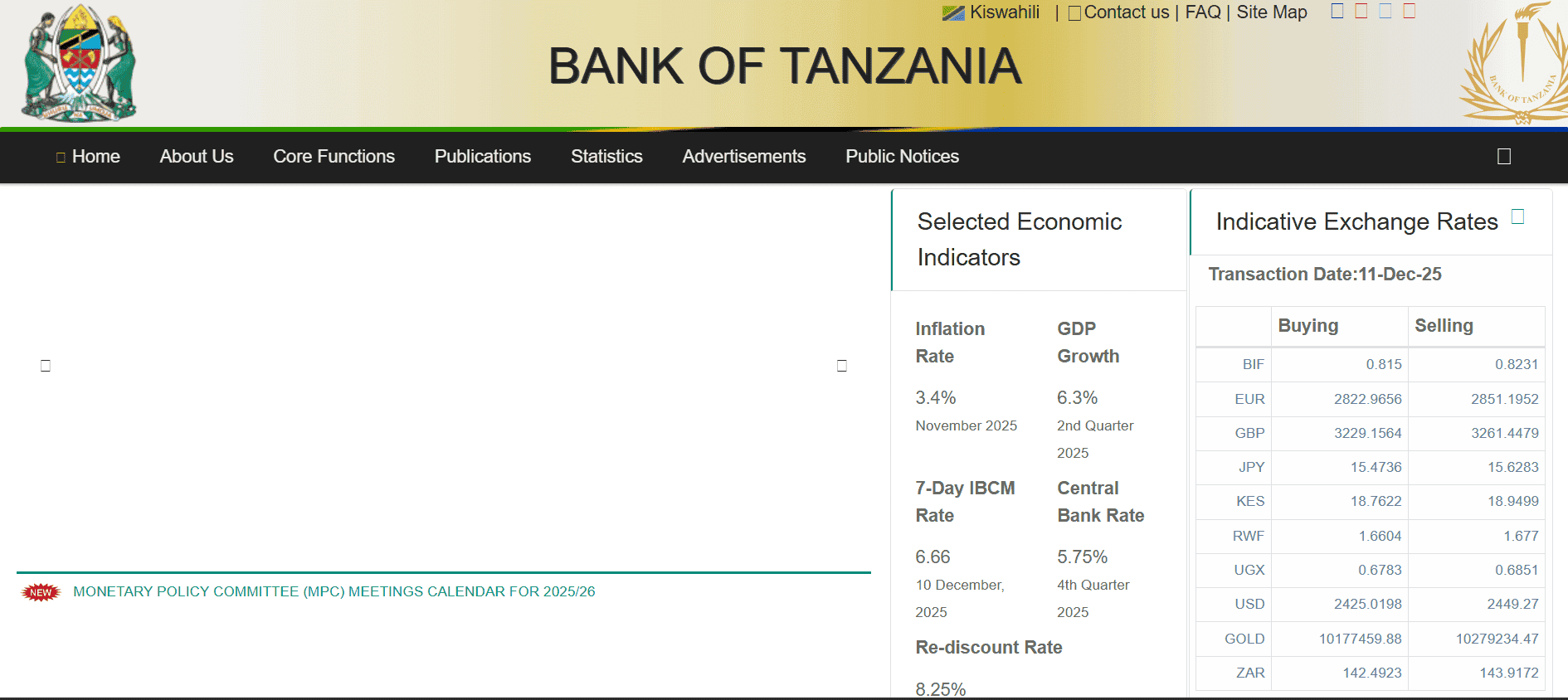
The Bank of Tanzania (BoT) is the central bank of the United Republic of Tanzania, established in 1966 under the Bank of Tanzania Act of 1965. It is fully owned by the government and is responsible for maintaining monetary stability, regulating the financial system, and ensuring a stable and sound economy.
It serves as the highest financial authority in Tanzania’s banking system, overseeing all commercial banks, microfinance institutions, credit bureaus, and other financial service providers. Its main role is not to serve individuals or give loans, but to control, regulate, and stabilize the entire financial ecosystem.
SERVICES
- Monetary Policy Management: Controls inflation and interest rates to maintain economic stability.
- Currency Issuance: Issues and regulates the Tanzanian Shilling (TSh), the official national currency.
- Bank Supervision & Regulation: Licenses, regulates, and supervises all banks and financial institutions in Tanzania.
- Financial System Stability: Ensures safety, soundness, and stability of the banking and financial sector.
- Payment Systems Oversight: Regulates and monitors national payment, clearing, and settlement systems.
- Foreign Exchange Management: Manages exchange rates and foreign currency reserves.
- Government Banking Services: Acts as banker, advisor, and fiscal agent to the government.
- Financial Inclusion Programs: Supports initiatives that expand access to financial services for underserved populations.
- Credit Bureau Regulation: Oversees credit reference bureaus and credit reporting systems.
- Economic Advisory Services: Provides economic and financial policy advice to the government.
Countries

Contact
Support Number
+255222232541
Address
16 Jakaya Kikwete Road 40184, P.O Box 2303, Dodoma Tanzania
Website
Facebook Url
X (Formerly Twitter) Url
More regulators providers
Explore similar providers that can support your lending operations.
Nigeria Deposit Insurance Corporation
The Nigeria Deposit Insurance Corporation (NDIC), established in 1988, provides deposit insurance to protect depositors in Nigerian banks. It ensures the safety of the banking sector by guaranteeing repayment in cases of bank failure, thereby maintaining public confidence.
Bank of Albania
The Bank of Albania, founded in 1992, is the central bank of Albania, responsible for formulating and implementing monetary policy, ensuring financial stability, and overseeing the banking system. It issues the Albanian lek (currency), manages foreign exchange reserves, and regulates interest rates to influence inflation and economic growth. The Bank of Albania also supervises and regulates financial institutions, ensuring their solvency and compliance with established standards. It works with the government to implement fiscal policies and maintain the country’s economic health.
Central Bank of Brazil
The Central Bank of Brazil, established in 1964, is the monetary authority of Brazil. It is tasked with managing the Brazilian real, controlling inflation, and implementing monetary policy to ensure price stability
Related reads
Explore useful articles connected to regulators and lending operations.

Lendsqr vs TIMVERO
November 8, 2026
Important regulators every Nigerian lender should know
March 17, 2024
A Guide to Nigeria’s Financial Ecosystem: Players, Services, and Regulators
February 12, 2023